Macros to Kilojoules & Calories
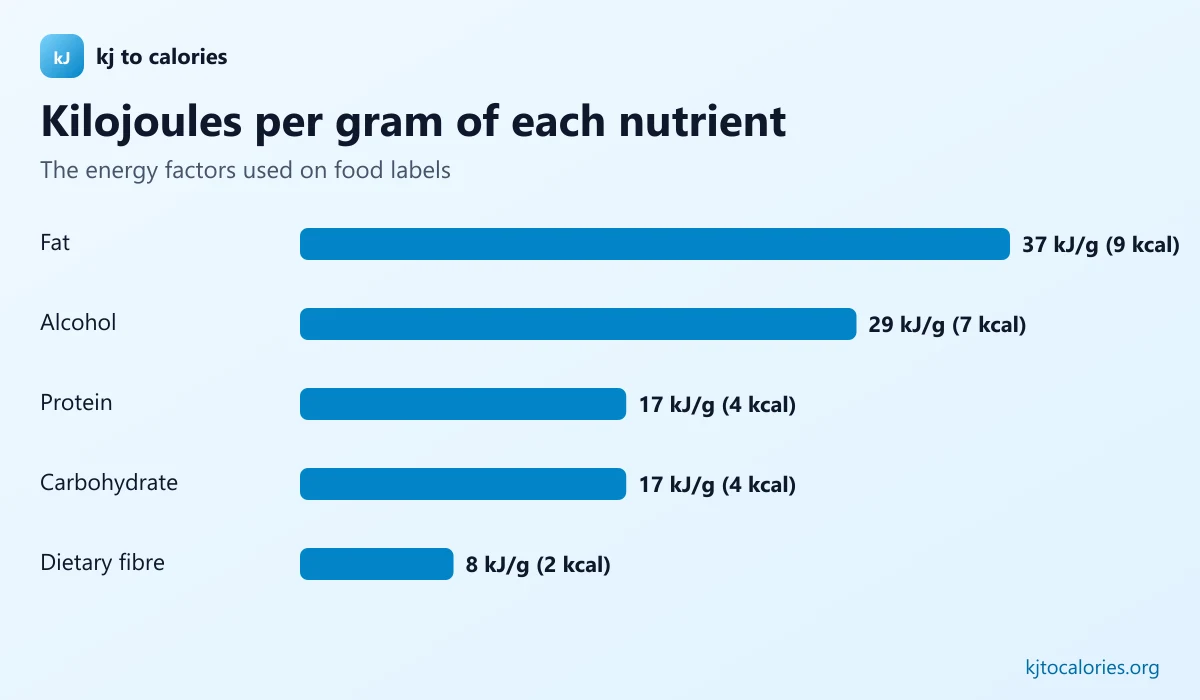
Energy factors: protein 17 kJ/g, fat 37 kJ/g, carbohydrate 17 kJ/g, fibre 8 kJ/g, alcohol 29 kJ/g.
On this page
How Many Kilojoules Are In A Gram Of Protein, Fat And Carbs?
Every gram of the main nutrients in food provides a set amount of energy. These energy conversion factors are used by food regulators, including Food Standards Australia New Zealand and the European Union, to calculate the energy you see on nutrition labels.
| Nutrient | Kilojoules per gram | Calories per gram |
|---|---|---|
| Fat | 37 kJ | 9 kcal |
| Alcohol | 29 kJ | 7 kcal |
| Protein | 17 kJ | 4 kcal |
| Carbohydrate (available) | 17 kJ | 4 kcal |
| Dietary fibre | 8 kJ | 2 kcal |
| Water, vitamins, minerals | 0 kJ | 0 kcal |
The calculator above multiplies each gram amount by its factor, adds them up, and shows the total in kilojoules and Calories, plus the percentage of energy coming from each nutrient.
Macro Energy Formula
kJ = (protein g × 17) + (fat g × 37) + (carbohydrate g × 17) + (fibre g × 8) + (alcohol g × 29)
kcal = (protein g × 4) + (fat g × 9) + (carbohydrate g × 4) + (fibre g × 2) + (alcohol g × 7)
Worked Example: A Chicken And Rice Bowl
Say a meal contains 40 g protein, 15 g fat, 60 g carbohydrate and 6 g fibre.
- Protein: 40 × 17 = 680 kJ
- Fat: 15 × 37 = 555 kJ
- Carbohydrate: 60 × 17 = 1,020 kJ
- Fibre: 6 × 8 = 48 kJ
- Total: 2,303 kJ, or about 550 Calories.
Protein supplies 30% of the energy, fat 24%, carbohydrate 44% and fibre 2%. That’s a well-balanced meal by most guidelines.
Why fat has more than twice the energy of protein, where these factors come from and why the kJ and kcal versions differ slightly is explained in our guide to kilojoules per gram of protein, fat and carbs.
Macronutrient Ranges For A Healthy Diet
Many national guidelines recommend getting your energy from a mix of nutrients within these ranges (sometimes called AMDRs):
| Nutrient | % of daily energy | At 8,700 kJ a day | Grams at 8,700 kJ |
|---|---|---|---|
| Carbohydrate | 45-65% | 3,915-5,655 kJ | 230-333 g |
| Fat | 20-35% | 1,740-3,045 kJ | 47-82 g |
| Protein | 15-25% | 1,305-2,175 kJ | 77-128 g |
Using Macros With kJ Targets
If you know your daily kJ target from the daily kJ calculator, you can plan macros like this:
- Set protein first: for many adults, 1.2-1.6 g per kg of body weight supports muscle, especially while losing weight. At 70 kg that’s 84-112 g, or 1,428-1,904 kJ.
- Set fat: around 25-30% of your kJ target.
- Fill the rest with carbohydrate, ideally from whole grains, fruit, vegetables and legumes.
Then use this calculator to check a meal or a whole day’s totals.
Related Tools
- kJ to calories converter
- Food label calculator
- Daily kJ calculator
- Energy factors explained
- Food kJ chart
- kJ to calories for food
Macros To kJ FAQ
How many kJ in 1 gram of carbohydrate?
One gram of available carbohydrate provides 17 kJ (4 Calories). Dietary fibre provides 8 kJ (2 Calories) per gram.
How do I calculate kJ from macros?
Multiply protein grams by 17, fat by 37, carbohydrate by 17, fibre by 8 and alcohol by 29, then add them together. The calculator above does it for you.
Why doesn’t my total match the food label exactly?
Labels round each nutrient, some use slightly different factors (or leave out fibre), and nutrient values vary between batches. A difference of a few percent is normal.