Alcohol is easy to overlook when you’re counting kilojoules. It doesn’t fill you up, it often comes with sugary mixers, and it’s usually consumed alongside food. Yet a few drinks can add as much energy as a full meal.
Key fact: pure alcohol provides 29 kJ (7 Calories) per gram: nearly as much as fat, with none of the nutrients.
On this page
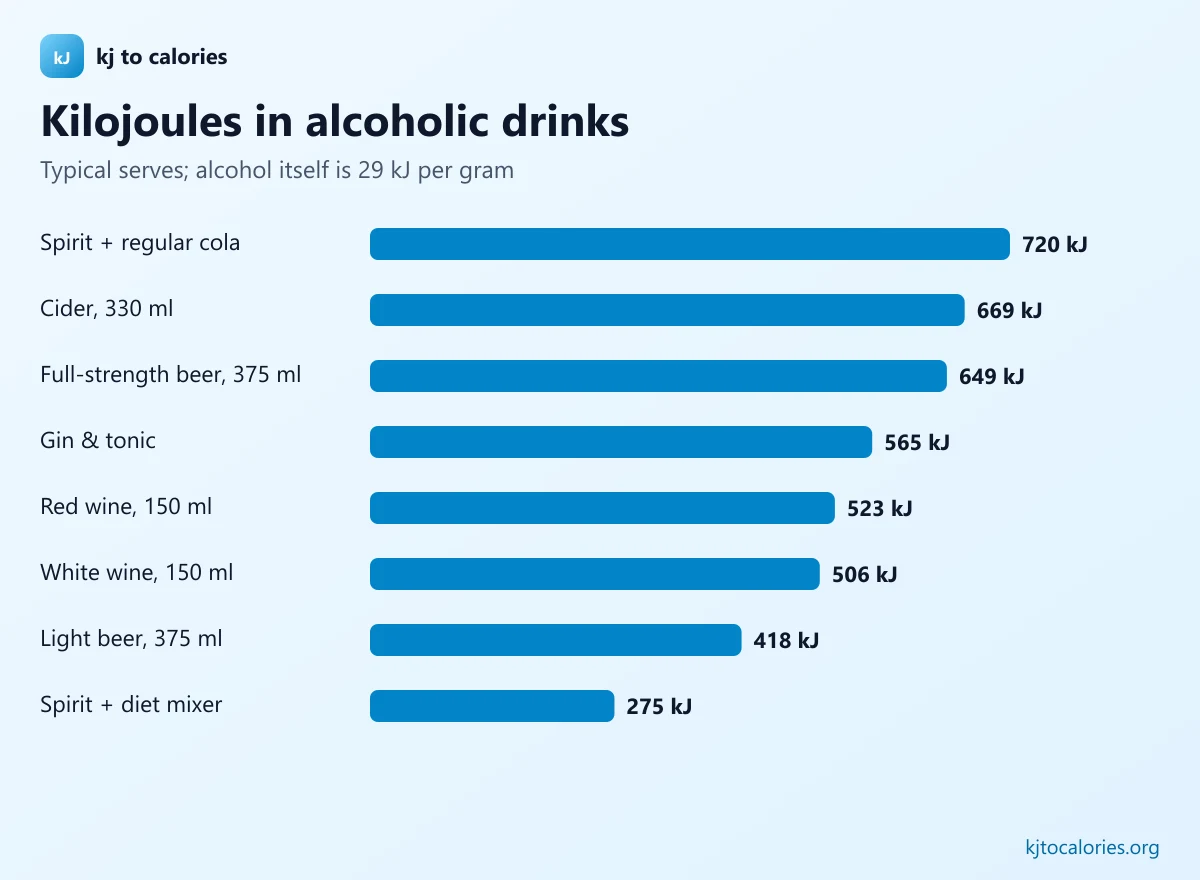
Kilojoules In Common Drinks
| Drink | Serve | Kilojoules | Calories |
|---|---|---|---|
| Beer, full strength (~4.8%) | 375 ml | 649 kJ | 155 kcal |
| Beer, mid strength (~3.5%) | 375 ml | ~500 kJ | ~120 kcal |
| Beer, light (~2.7%) | 375 ml | 418 kJ | 100 kcal |
| Red wine (~13.5%) | 150 ml glass | 523 kJ | 125 kcal |
| White wine (~12.5%) | 150 ml glass | 506 kJ | 121 kcal |
| Sparkling wine | 150 ml glass | ~490 kJ | ~117 kcal |
| Cider | 330 ml | 669 kJ | 160 kcal |
| Spirit shot (40%) | 30 ml | 272 kJ | 65 kcal |
| Gin & tonic | 30 ml gin + 200 ml tonic | 565 kJ | 135 kcal |
| Spirit with regular cola | 30 ml + 250 ml cola | ~720 kJ | ~172 kcal |
| Spirit with diet mixer | 30 ml + 250 ml diet | ~275 kJ | ~66 kcal |
How To Calculate The Kilojoules From Alcohol
You can estimate the energy from the alcohol in any drink:
Alcohol Energy Formula
Grams of alcohol = volume (ml) × ABV% ÷ 100 × 0.789
kJ from alcohol = grams × 29
(0.789 is the density of alcohol in grams per millilitre.)
Example: a 375 ml beer at 4.8% ABV contains 375 × 0.048 × 0.789 = 14.2 g alcohol, which is 14.2 × 29 = 412 kJ from the alcohol alone. The remaining energy, roughly 200-240 kJ, comes from the carbohydrate left in the beer.
Standard Drinks Around The World
A “standard drink” contains a fixed amount of alcohol, but the amount varies by country:
| Country | Standard drink | kJ from the alcohol |
|---|---|---|
| Australia | 10 g alcohol | 290 kJ |
| New Zealand | 10 g alcohol | 290 kJ |
| United Kingdom (1 unit) | 8 g alcohol | 232 kJ |
| United States | 14 g alcohol | 406 kJ |
Why Alcohol Kilojoules Add Up
- They don’t fill you up. Liquid energy doesn’t trigger the same fullness as food.
- They lower inhibitions. Snacking often increases while drinking.
- Serves are getting bigger. Many venues pour 175-250 ml glasses of wine, not 150 ml.
- Your body prioritises burning alcohol, temporarily putting other fuel use on hold.
Four full-strength beers are about 2,600 kJ, close to a third of an 8,700 kJ day.
Ways To Drink Fewer Kilojoules
- Choose lower-alcohol options. Light beer has about a third fewer kilojoules than full strength.
- Use diet or soda-water mixers. A spirit with soda water is under 300 kJ.
- Measure your wine. A 150 ml pour is noticeably smaller than most home pours.
- Alternate with water.
- Set a drink limit before you start.
- Watch cocktails. Creamy and sugary cocktails can exceed 1,200 kJ each.
Health Note
Kilojoules aren’t the only concern with alcohol. Health authorities advise limiting how much you drink to reduce the risk of harm. If you’re concerned about your drinking, speak to your doctor or a local support service.
FAQ
How many kJ in a glass of wine?
A 150 ml glass of red or white wine has roughly 500-525 kJ (about 120-125 Calories).
How many kJ in a beer?
A 375 ml full-strength beer has roughly 650 kJ (155 Calories); a light beer about 420 kJ (100 Calories).
How many kJ in a shot of vodka?
A 30 ml shot of 40% spirit has about 272 kJ (65 Calories).
Is alcohol fattening?
Alcohol provides 29 kJ per gram and adds to your total energy intake like any other food or drink. Regularly drinking more than you account for can contribute to weight gain.
How many kJ in a standard drink?
In Australia and New Zealand, the alcohol in one standard drink (10 g) provides 290 kJ. Mixers and sugar add more.